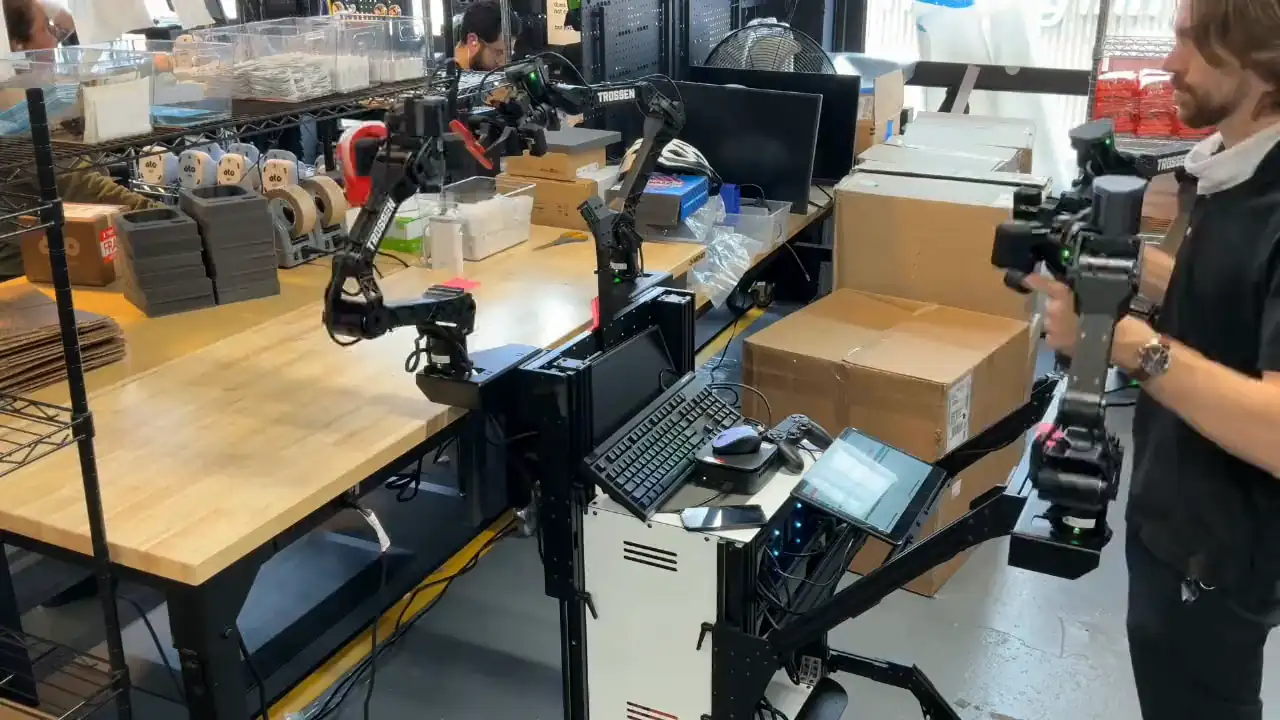
01 Deploy
Arms go to your line and run production.
They learn the job once and run it the same way, every shift.
So consistent it's boring.In production today · from $3/hour effective
Problem
You can't hire for it, and fixed-path robots can't do it.
Most manipulation work is still done by hand because rigid automation can't feel what it's doing.
Proof
Wire prep and assembly, running in production at an electrical prefab shop in Indiana. Real orders, real quotas, every shift.
The bottom line
An arm starts at $3 an hour in production today, on a fixed monthly price you can plan around.
It shows up for every shift and holds the same quality from the first part to the ten-thousandth. Nobody to recruit, retrain, or replace.
Price your first armWorking with us
We take on one task at a time, like wire prep, kitting, and assembly, and run it end to end on our arms.
You pay a flat monthly fee per arm, well below the fully burdened cost of the labor it replaces.
No capital approval needed: it comes out of the wage budget you already have.
Arms, tooling, software, and maintenance are all included. If something breaks, we fix it.
What happens when you write to us
A short call, then we walk your line and pick the task together.
We scope a paid pilot and bring the arms to your floor.
It goes to production. You pay monthly; we maintain everything.
Backed by & building with


The flywheel
Work becomes data. Data becomes a better model. Hardware, software, and the model improve together on the fleet's own experience.
Arms go to your line and run production.
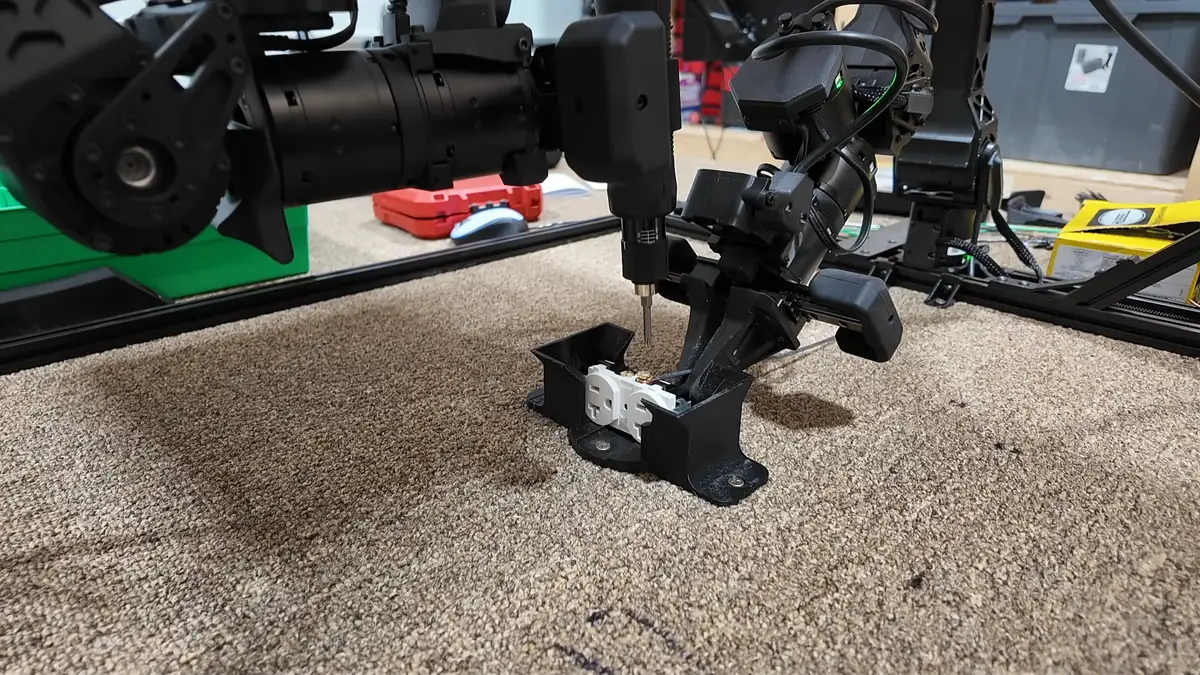
One runtime drives every shift. Real parts, real quotas.
Torque, vision, and outcomes stream back as training data.
phi-1 · 267M
441K frames · 343 ep
600K steps · GB10
retraining_
The model retrains on the fleet's data and ships to every arm.
Underneath: a tactile foundation model, a hard real-time safety layer, hardware we build ourselves, and one runtime across the fleet. The full build story →
Why touch
Vision tells machines what the world looks like. Touch tells them what it is. Rigid automation fails the moment parts flex, snag, or shift.
A real torque trace from one wire-bend episode in our production training data. The spike is contact: the arm feels the wire take the bend.
FAQ
It's in production today at an electrical prefab shop in Indiana, running wire prep and assembly on real orders and real quotas, every shift.
A flat monthly fee per arm, scoped to your task, starting at about $3 an hour effective, roughly 94% below the fully burdened cost of manual labor. No capital purchase: it comes out of the wage budget you already have.
Arms, tooling, software, and maintenance are all included in the monthly fee. If something breaks, we fix it.
We start with one task at a time, like wire prep, kitting, or assembly, and run it end to end. As the fleet works, that experience trains the model, so every arm gets better from what any one arm learns.
A short call, then we walk your line and pick the task together. We scope a paid pilot and bring the arms to your floor. Once it's working, it goes to production and you pay monthly while we maintain everything.
Vision tells a machine what the world looks like, not what it is. Rigid, vision-only automation fails the moment a part flexes, snags, or shifts. Touch tells the arm what's actually happening at the point of contact, in real time.
Describe the task you can't staff, or pick a track. We're based in Lafayette, Indiana and San Francisco.